

The Best Candidates Are Looking for You—Can They Find You?
Getting the right people is harrrrd.
All that testing and interviewing delivers the right fit only 50 to 75% of the time. Even if you use the best executive search firm in the world, the stats for senior executive hires are sobering: 50% of them fail within 18 months.
But let’s not talk about statistics. You can find lots of those. The bad news shows up all over the place telling you exactly how harrrrrd it is.
Let’s talk about what you cannot find so easily: a way to get the right people that protects your sanity and makes everyone happy.
What if the reason you’ve hired the wrong people has nothing to do with your process and everything to do with the fact that your company is invisible to the right person?
That’s what Robert figured out, and it’s also why he’s so happy (and richer than ever) now.
Part One.
From Bad Hires to Great Ones and Growth
In just over five years, under Robert’s savvy leadership, his company grew 150 percent from 10M to 25M in annual revenue. Revenue per employee went up. CAC went down. Lots of good things happened.
The one thing that made the biggest difference: He got great at finding people who belonged in his company.
“Bad hires have set us back more than any competitor ever did. Millions, at this point.” That was one of the first things Robert told me when he interviewed me. He smiled the way anyone does after having run the gauntlet.
As Tony Hsieh (Zappos) put it: “If you add up the cost of all the bad hires we made at Zappos, it’d be $100 million.”
I asked him to tell me about his bad hires.
It was variations on a theme. The same stories I’ve heard hundreds of times, with twists. Of course, the tales began with so many of the candidates being amazing!
The Halo Effect
He described how he’d been caught in the glow of the Halo Effect.
That’s an expression that goes back 100 years to Edward Thorndike, a psychologist who coined it when he discovered that if one standout positive trait was identified in a person, it was enough to cause someone else to assume specialness and competence across all areas, even if there was no evidence to support it. Thorndike said it happens because our brains prefer consistency over all things. So when we see one good thing, we generalize, and assume the rest of the package is also just as good.
But as the adage says, it turns out that to assume not only makes an ass of you and me, but it’s expensive. And painful.
I’ve done it. You’ve done it. We’ve surrendered to our own confirmation bias and gotten ourselves caught in the trap of the Halo Effect. We’ve thought, “This person is great!”. And we’ve interpreted everything she has said thereafter also as great!…or at least a sign of great potential.
GOTCHA. Six Ways the Halo Effect Tricks Us
There are six ways the Halo Effect shows up in hiring, and as Robert told me his stories, we checked off the list.
- The Communication Halo. He rated a confident, articulate CIO candidate as high in competencies, like analytical and technical judgment, without ever having substantiated those competencies at all.
- The Brand Halo. When a candidate came from a recognizable global company or the “best” school, he automatically rated them as better across the board than the evidence had supported.
- The Appearance Halo. He perceived candidates who were well dressed and physically attractive as competent before he had even assessed their skills.
- The Single Strength Halo. He was a self-proclaimed sucker for impressive answers to important questions. His infatuation made him upgrade a candidate’s ratings on subsequent unrelated questions, where their answers were not as brilliant.
- Similarity Bias Halo. People who reminded him of himself or someone else he liked and trusted in his life were favored over others.
- The Savior Halo. (And this one made him laugh.) He had several miracle candidates who just seemed to show up and were just the perfect fit to fill the current gap. (That’s always a funny one. The desperation to fill translates into hallucinations of perfection.)
Let’s face it, he isn’t the only one who has ever been swept away by confirmation bias as the easy way to escape the pain of hiring. Except it comes back to haunt us, doesn’t it?
He didn’t mince words when he told me the company’s bad hires had been a ticket to hell.
He didn’t want to make the same mistakes anymore, and though he was using a search firm to help him, he was looking for an edge. And he was in a market that was growing fast, and he didn’t have any time to waste. So, he hired me, too.
Part Two.
Why Do So Many Perfect Fits Fail?

Do you know who Bradford D. Smart is? The top-grading guy. He was onto something when he asked, “Shouldn’t we be as rigorous in hiring as we are in capital spending?”
The obvious answer is yes. Of course, the success of your organization is determined by the quality of your people. People make up your organization. They represent you. They are doing all the things that make your business a business. If they aren’t quality people, your company can’t be.
Yet, if there’s one thing I’ve learned in these years working with CEOs, founders, and ultra-successful leaders, hiring takes time. They have to delegate it.
Executive search knows that human judgment can be unreliable, so they use processes to compensate for it. They know that people are hired for what they say and fired for who they are. So their job is to go beyond what candidates say. They use all of the tools, they investigate, and they do deep dives. They do the work. Yet, even with all the fancy schmancy processes, they come up short.
That’s what mystifies my friends who are in executive search. They feel confident about the candidates they present to their clients. They know they’ve done their jobs. And they want it to work out. So why, in practice, does it not?
Despite all of it, they only get it right 50 to 70% of the time, depending upon how you define “right.”
So if the executive search firms are doing their jobs, and they really are finding high-quality candidates, why do so many perfect fits fail?
The Answer: Solve More Than One Problem For Your Candidate
Here’s why.
What almost no one does is use the interview and discovery process to solve a problem for a candidate.
The focus is on what the candidate can do for the company. When the evidence favors a candidate, the attention shifts to what the candidate gets. It’s limited to a package, and though a package might solve one problem for the candidate (say, economic), it doesn’t necessarily solve enough.
P.S. Before you do what Robert did when I talked to him about this, and roll your eyes and look away, as if you smelled a servant leader sermon coming, stop. That’s not what this is about.
If you want to attract great people and build a great team that works like mad for you and advocates for you and your company in ways you’ve not yet imagined and loves it all the while, you must be interested in how you can solve more than one problem for the candidate.
The more problems you solve for a candidate, beyond the economic issue, the more boxes you tick in the ingredients of belonging.
If you want to be done with the nightmare of bad hires, you must understand the origin and importance of belonging.
Part Three. What Robert Asked Me.
Make Sure People Can See Your Company’s Identity
Robert asked me what I would do differently if his company were mine to help. So I told him.
Building a great company means building belonging.
When you hand a candidate a job description, a package, and a title, you hand them nothing to opt into except for a job. Even if you believe your company is fantastic, or you think the position is important, or the jobs are scarce, a job is just a job after all.
It’s a rare thing that getting a job is the only problem that a candidate wants to solve.
If you showcase the position, but your company’s identity stays invisible, the best people, meaning the people you want, can’t say yes to you. They can’t say yes to a company they can’t see.
When you have a clear Category of One Identity that sets your company apart, the right people arrive more by design than by luck. The right person can find you. It’s like he or she can see a light in the darkness. More importantly, the wrong person will turn the other way. Both of those are wins.
An identity that makes you stand out as a Category of One is more than a tagline or a value proposition. It’s not a mission statement, and it’s not a culture. It’s the WHO that makes people feel either like they belong or they don’t. When you’re recognized for that, the right team can find you and stay. Because they belong.
You win when people belong, because they win.
Ultimately, Robert said, “And you will show me how to do this.” And so we began.
Belonging Has Nothing To Do With a Particular Way of Leading
Let me take a moment to cleanse your palate of any bad taste, in case you just can’t stand the flavor of the term “servant leader,” and you suspect that’s where I am going. That’s not what I am talking about or getting to.
You don’t have to go back to the 70s and proclaim the “leader exists to serve the vision and serve the people”. You don’t have to agree with Ken Blanchard. Even if you are a Simon Sinek fan, you don’t need a tattoo on your arm that says “Leaders eat last.” You don’t need to follow Patrick Lencioni’s or Brene Brown’s path to organizational health through humility and trust building, or courageous leadership. You don’t have to be like Adam Grant and create a giver culture. And even if you appreciate the Level 5 Leader framework and want to be a black belt at Jim Collins’ Window and Mirror principle, you can leave that aside.
What I’m talking about is much simpler.
The fact is that people will thrive when they belong. And before you can apply any leadership principle, you have to be the one to define what the identity is that people will relate to. No one will feel belonging simply because you have a mission statement or a vision. Belonging emerges from your IDENTITY. It’s a who-centric thing; not a what-centric thing.
Belonging makes your people and company thrive. It comes from your Category of One Identity. It is what people see, feel, trust, and believe in. It’s what makes the right people feel relief, agency, and power. It’s where your mission, vision, and culture are born. And THAT is what attracts the real, perfect candidate.
So use whatever leadership style you want. Just make sure that your Category of One Identity is the place you start so belonging can happen.
What Makes You A Category Of One?

There is a 7-part process to follow to define your Category of One Identity, but start here:
The thing that puts you in a class by yourself and makes you one in a million is your worldview. Start there. It’s bigger than your view of your company. It’s what holds your company in form.
It shows the world how you view reality, interpret the world and life events, and make your choices. It gives them a glimpse of what you consider problems, pressures, and challenges in the world. And it shows them what you see as opportunities, possibilities, and solutions, too.
At every level of your company, your people are looking for a point of view and an interpretation of the things that are affecting them in the world. They want to work for and with someone who shares a worldview they understand. That’s the foundation of the reality they belong to. You don’t have to make up some special formula for belonging. It exists in your worldview.
That’s your first step of the 7-part process. Do that one thing and you’ll start changing the world of hiring. People want more than a package. They want to work in a company that is grounded in a worldview they experience. That’s where meaning begins. .
When you begin to show your Category of One Identity to your candidates, you’ll shine like a beacon in the darkness.
What Gifts You and Your People Get From Your Category of One Identity
Here are four things your people get from your Category of One Identity:
- Cognitive Fluency. Your identity gets coded as distinctive. That improves recognition and memory. It makes it easier for your people’s minds to store and retrieve meaning.
- Certainty from Real Signals. Your personal distinctiveness functions as a signal that reduces their uncertainty; they know what they are getting. Certainty decreases emotional static.
- Psychological Stability and Decision Consistency. Your coherent identity makes them feel calm and supports their decision making. They trust they are making decisions in a context they know and feel at home in.
- Compounding Returns Over Time. Your coherent Category of One Identity supports a reputation that gives you and the company disproportionate future recognition over time, without you having to add extra work.
Your strong Category of One Identity gives candidates three things at the same time: a sense of relief, a sense of agency, and a sense of power.
Those three things make them want to work for you more than any package you could present.
Relief. When you articulate why your company is important now, and share your point of view and interpretation of why it’s important, your ideal candidate feels relief. He or she can not only say “It makes sense”, but also “Wow, yes. I get that. I agree.”
Agency. When your point of view naturally flows into the practical actions and expectations of your company, your ideal candidate feels a sense of energy moving in a direction that feels purposeful. He or she can opt into meaningful action. That’s more than work.
Power. The practical actions and expectations your company embodies make sense of an otherwise stressful world. In that way, it provides a path to freedom from what is intimidating, confusing, or just plain scary.
When your Category of One Identity is coherent, the authenticity itself will give a candidate enough information to opt in fully or not at all.
Who-Centric Wins
So many leaders miss this. I think it’s because they started off being what-centric. Business schools traditionally spend 90% of their time teaching their students finance, operations, strategy, corporate finance and the remaining 10% teaching them how to interact and work with people. Yet, in every senior leadership role, it’s flipped. It’s 90% spent on the people. It’s not a surprise that leaders get sucked into a what-centric world that’s taught them to attach their company’s identity to a product or a service. But think about it: the foundation of belonging is not a what; it’s a who. And a who has a worldview…a point of view. A who interprets things, makes sense of things. A who can only become trustworthy if a worldview is shared.
We want to be with whos, not whats.
We want to work with whos not whats.
Whos see each other and know each other. Whats are just objects. Nobody on your team wants to be an object. Whos have to feel belonging, or they end up feeling like whats.
The minute someone feels like a what, you’ve got more problems on your hands than you can count.
I’ve sat in so many of my clients’ meetings where I’ve witnessed the pillage. Leaders forget there are human beings sitting in those chairs. They want to extract all they can from the talent. That’s what they hired them for, after all, right? But they’re wrong. The turnover tells the truth.
No one can build a great company ignoring the content and the context of their own and their team’s lives. It just doesn’t work that way.
Here are three different Category of One Identities that I gave as examples to Robert to prove to him and perhaps to you that this is not about being a certain kind of leader. It’s only about having a distinct and true Category of One Identity. Each of these leaders has a particular worldview. Like it or not, in each case, it was clear enough for people to recognize themselves in it, and to see, and to know they wanted to be part of it.
Category of One Identity: Jack Welch, The Competitor.
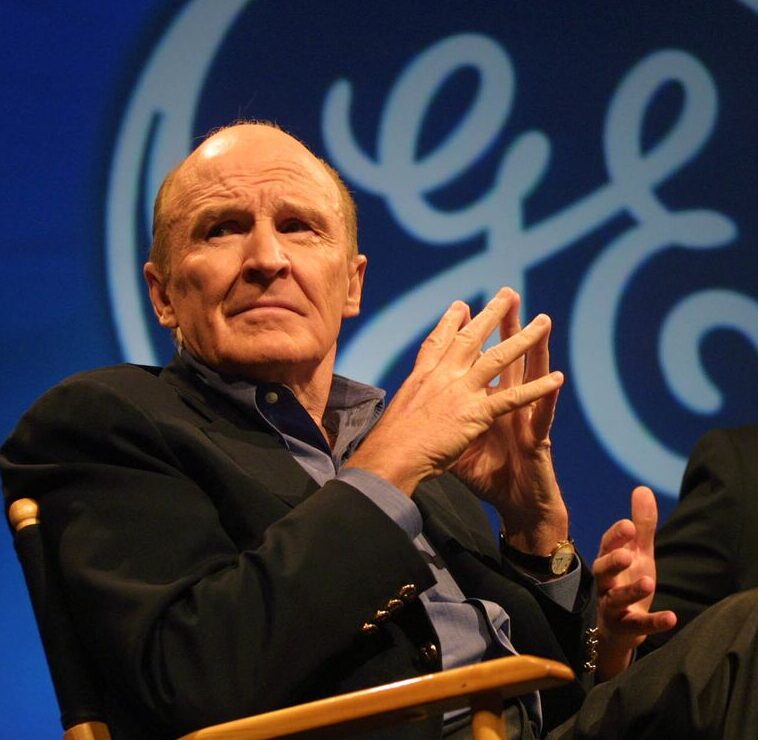
Jack saw the pressures that were impacting him: globalization, increasing competition, bureaucratic bloat, accelerating technological change, and a rising expectation for performance.
His interpretation of those pressures was that the world was becoming faster, more competitive, and less forgiving. He believed winning required speed, simplicity, candor, meritocracy, and constant improvement.
He mandated that every GE business unit had to be number one or number two in its market; otherwise, it needed to be fixed, sold, or closed. And he also believed in the 20-70-10 system, in which 20% of employees are A-players who deserved recognition and rewards. The 70% performed their jobs well but needed mentoring and coaching to move into the top 20%. The bottom 10% were underperformers who were expected to be removed from the company each year, as they only drained the company’s resources.
Those were his observations, interpretations, and what gave his world meaning. Not right or wrong. Not for others. But for him.
The “What to do about it” was born from him. The “Who can handle it” was born from him. The believable true stories he experienced and told came from him. The meaningful action he demanded came from him. The path to freedom he spoke about came from him. His identity was coherent. It was him.
GE embodied his Category of One Identity and became the place for people who wanted to compete at the highest level, to be relentless, challenged, and to build careers in one of the world’s toughest performance cultures in American history.
To GE’s candidates, his Category of One Identity was a magnet. The people who belonged there knew it. Jack solved more than one problem for them. For those who didn’t belong, there was no question: they did not want to work there.
Jack’s worldview wasn’t simply a personality trait; it was part of a fully embodied Category of One Identity.
Category of One Identity: Howard Schultz, The Connector.

Howard saw the pressures that were impacting him: the decline of community institutions, the rise of the service economy, increasing social disconnection, competition for talent, and a growing desire for meaningful work rather than simply a paycheck.
His interpretation was that the world was hungry for dignity, belonging, and human connection. He believed winning would come from treating employees not as costs, or cogs in the wheel, meant to be driven, but as partners who would create extraordinary customer experiences.
And he didn’t just talk about it. He put those beliefs into practice. He made every Starbucks store a safe space between home and work that feels safe, warm, and familiar not only for customers but also for employees. And he did it by offering employees benefits that made them feel valued, including comprehensive health insurance and stock options that gave them ownership in the company to which part-time employees were also entitled. He also provided full tuition coverage for employees who wanted to complete a bachelor’s degree, all while they were earning money to support themselves and their families.
So he made Starbucks the place perfectly fit for his own identity. It attracted people who wanted to build relationships, create community, and take pride in making someone’s day a little better.
Those were his observations, interpretations, and what gave his world meaning. Not right or wrong. Not for others. But for him.
The “What to do about it” was born from him. The “Who can handle it” was born from him. The believable true stories he experienced and told came from him. The meaningful action he demanded came from him. The path to freedom he spoke about came from him. His identity was coherent. It was him.
For people who ended up working at Starbucks, his Category of One Identity was clear and irresistible. The people who belonged there knew it. Howard solved more than one problem for them. For those who didn’t belong, there was no question: they did not want to work there.
Howard’s worldview wasn’t simply a personality trait; it was part of a fully embodied Category of One Identity.
Category of One Identity: Indra Nooyi, The Steward.

Indra saw the pressures that were impacting her: globalization, increasing complexity, unceasing technological change, rising expectations for diversity and inclusion, blurred boundaries between work and home, and a growing desire for work that had meaning beyond a paycheck.
Her interpretation of those pressures was that high performance and humanity were not necessarily opposing forces. And she believed winning would come from pitching in to develop the whole person, think for the long term, and create value for employees, customers, communities, and shareholders all at the same time.
She was deeply committed to helping employees grow while promoting work-life balance. She did this by offering flexible work arrangements, parental leave, and onsite childcare facilities. And she even made her executives feel that they mattered not only to the company but also to her, by writing thank you notes to their parents, expressing her gratitude, and telling them how she saw their children as gifts to her and the company.
So PepsiCo became the place for people who wanted to do demanding work without pretending they had no life outside of the office.
Those were her observations, interpretations, and what gave her world meaning. Not right or wrong. Not for others. But for her.
The “What to do about it” was born from her. The “Who can handle it” was born from her. The believable true stories she experienced and told came from her. The meaningful action she demanded came from her. The path to freedom she spoke about came from her. Her identity was coherent. It was her.
For PepsiCo candidates, her Category of One Identity was clear. The people who belonged there knew it. They felt it, and Indra solved more than one problem for them. The ones who didn’t belong stayed away.
In each case, both the leader and the people of the company got the gifts I have outlined above:
Cognitive Fluency, Certainty from Real Signals, Psychological Stability and Decision Consistency, and Compounding Returns Over Time. In plain English, they got belonging.
When you look at these three leaders, you can see how different their identities are, and yet each one of them was successful, regardless of their leadership styles. What you can say is that their leadership styles were coherent with their own Category of One Identities.
Their interpretation of the problems, pressures, and challenges of the world is what created the opportunities, possibilities, and solutions for their teams. Each one of them looked at the same changing world and saw it differently, and articulated exactly that.
Their worldviews interpreted the problems they saw, what solutions mattered, and ultimately determined who would feel at home inside their companies.
None of them could have copied the other. Jack Welch could never have been Howard Schultz, and Howard Schultz didn’t need to be Indra Nooyi.
The beautiful thing is that each of them won because they honored their own Category of One Identity. Their companies became a place where that interpretation could be counted on every day.
That’s what created belonging.
So if you think belonging can only happen in a warm and fuzzy environment, think again. And for heaven’s sake, don’t hold yourself to a standard that doesn’t exist. Hold yourself to your own standard, and stick to it.
Your worldview is the foundation of what gives your Category of One Identity the coherence that creates belonging. That’s what interprets pressure, problems and challenges, and offers opportunities, possibilities, and solutions.
It’s as unique as your own DNA. That’s why no one can borrow a Category of One Identity from another person.
So, if you haven’t discovered yours yet, it’s time to do it, and then when you put it out there for people to see and to know, you will attract the team of your dreams, and they will work for you in ways you’ve never imagined.
TWO CASE STUDIES.
The following two stories are examples of how the Category of One Identity changes the success of companies, and how it saved the founder from wasting time on the wrong things when time was of the essence, just as Robert experienced.
Case Study: Jeff’s Worldview Was Hidden
And so was his Category of One Identity.
Jeff, a CEO who owned and ran a clinic generating 40 million a year, was stuck. His doctors kept leaving, and every time they did, there would be chaos. Of course, chaos equals loss.
The doctors who did stay were warm bodies ticking the boxes. Show up. See patients. Go home.
When I interviewed the doctors, I heard the same story over and over. They were doing their jobs. They didn’t like their jobs, but they told me they were doing them well enough.
Many of them told me they used to like medicine, but that had changed: The protocols, the notes, the administration, the rules, the rush left them no time to think, no time with a patient, no time to know their teams, and no time for themselves. It had turned into a profession that demanded their best judgment, but gave them no space to use it.
I reported back to Jeff. Here’s what I told him:
Here are the top five pressures:
- The chronic disease wave is making every patient more complex.
- The healthcare workforce shortage is putting too many demands on too few hands.
- The burnout economy is seeing depletion as a normal cost of work.
- The collapse of trust is turning the doctor visits into extra work to prove that they did what they said they did.
- There’s a constant skills reset that is asking these doctors to keep adapting while they handle a full load.
Each of these doctors is stuck inside these five colliding systems. Now you know why they hate their jobs. No amount of carrots or sticks will make this clinic grow. They are struggling in a profession that’s changing, and they don’t have a leader who interprets it for them or offers them relief, agency, or power.
We came up with a name for those five forces that Jeff could embrace and talk about. He called it The Death of the Doctor Economy. We went through the 7-step process to clarify his Category of One Identity.
He understood what the doctors were up against. He felt it, too. A name doesn’t make the pressure disappear, but it’s a place to start sharing a point of view.
Jeff had a worldview. He didn’t have to make one up. Yet, somehow, he’d thought it wasn’t meant for his company. The Death of the Doctor Economy was a problem he knew how to solve in his little corner of the universe. Suddenly he was able to see himself as a leader in the next generation of medicine.
His solution was simple because he believed it. It wasn’t contrived, it wasn’t a recommendation from a consultant. It was a living truth from his mind and heart: A doctor with a team she trusts and time to meet with that team will provide the best care. They’ll figure out how much time to spend with each patient, and they’ll make it happen, together.
So he dropped the requirements.
He got a small team of clinical liaisons to turn his conviction into practice. Instead of bending the doctor around his rules, he asked them to work with the doctors to retool scheduling around the clinical team’s rules. The practical outcome was that some doctors chose to see fewer patients, and some chose to see more. The clinical liaisons helped make each doctor’s best version real.
He retrained the administrative and front desk to learn the nature of every clinical team and to help send patients toward the experience for them that would fit.
He invited the doctors to unofficial board meetings to help shape the benefits and determine how to handle time off.
It was his worldview that sparked the shift, and it made all the difference.
The Category of One Identity allowed him to translate what he saw into action, and that is what transformed not only his business, but the lives of his people. Suddenly, they belonged.
The right doctors and their teams stayed because they were energized. They didn’t stay for the job. They advocated because they had a leader who offered them meaning they were in alignment with.
He wasn’t trying to please them. He was expressing his own worldview and his own Category of One Identity, and those who loved it, loved to stay. Those who didn’t, departed. His staff shrunk. His revenues grew.
Before long, he opened a second location, and, using his Category of One Identity, including his understanding of The Death of the Doctor Economy, he was on course to earn 5 million at the end of 24 months.
He would shake his head and tell me that he wouldn’t have believed it could be this simple.

Case Study: Freddy’s Place.
The one shift that took a staffing company stuck at 30 million for 10 years to 50M.
The CEO, Stan, was a second-generation owner who provided construction and maintenance staff services in a mid-size American city. But he was stuck. His lowest wage workers kept walking away for jobs that paid a few dollars more an hour. He said that he couldn’t continue to raise the pay, or he’d have no profit.
Yet when I listened to the men, the real pressure and pain showed up as something other than wanting more money.
The problem was that childcare was expensive. They weren’t necessarily looking for higher paychecks so much as they were looking for enough money to cover childcare.
Stan was a family man. And he understood immediately. He realized what he was observing and gave it a name: The Dignity Dance Threshold. He saw that the cost of living was rising faster than any worker could handle; that the gig and staffing work of these kinds of employees made it necessary to play a shell game. They couldn’t feel safe about their kids’ care.
Funnily enough, he said it was the workers who worked for his dad who helped bring him up while his dad was growing the company. Yet, somehow, he had gotten disconnected from his own history, beliefs, and even had lost his worldview (that included community parenting).
He found that housing and childcare were overtaking every other choice in his employees’ lives. The burnout economy they were stuck in, between work and parenting, was creating the tension of constant calculation. So he decided he’d solve one of them by being true to his belief system.
He believed that dignity, stability, and fatherhood came from more than just an hourly wage. It came from the community, and he knew that firsthand.
He started to see childcare as an asset to his business. And because he had that conviction, he decided to change his company. He opened a childcare center at the company headquarters and brought in community volunteers to offset part of the cost. Then he called it Freddie’s Place after one of his father’s longest employees, the one who he said had raised him.
He did not change his employees’ pay structure.
Guess what? The workers stopped walking away. Even if the pay was a little higher elsewhere, they wanted to stay with him because they felt like they belonged, and so did their families.
Then, the number that hadn’t moved for 10 years started to move, and Stan’s company grew.
Your Identity Comes First
When you look around, I assure you, you see pain, problems, pressures, and challenges, and at the exact same time, you see opportunities, possibilities, and solutions. The leadership and entrepreneurial spark does that, automatically.
Trust yourself. Not everyone sees what you see, or interprets it the way you do. You are unique in that way, and, as my grandpa used to say “It’s not for nothing.”
You are one-in-a-million. Your Category of One Identity sets you apart, and if you are willing to articulate it, that’s what sets you up to win. It’s what makes you seen, known, and chosen. And it’s the thing that creates belonging.
That is what attracts the right candidate. That’s what builds your team. That’s what makes them roll up their sleeves and call your company “mine”. They feel like they can solve their problems because of your company rather than despite it.
You don’t have to be tricked by the Halo Effect ever again.
A company built around the leader’s Category of One Identity draws in the right people. That’s why the nightmare of bad hires stops.
Similarity bias loses its grip because belonging brings in people who fit, not people who flatter your reflection.
Hiring people only for what they say loses its grip because you start hiring people for what they opt into: belonging.
When you know and are sure of your own Category of One Identity, you talk about it, and you act on it. Your ideal candidates won’t only want the job but will also want to work for you.
The job can be a good fit, but it’s the belonging that makes someone want to be there, stay there, contribute, advocate, and make it a success.
Yet, most leaders don’t bother to take the time to find their Category of One Identity, let alone articulate it. They’re quick to complain that no one appreciates their brilliance, genius, or the opportunities for growth, development, money, and success their company offers. They talk a lot of what and miss a lot of who. And they suffer. It doesn’t have to be that way.
Back to Robert With His Category of One Identity.

When Robert identified his Category of One Identity, everything in his company changed because the people felt relief, agency, and power. It was the natural result of saying who he is.
He stopped hunting for the perfect candidate and started looking for who recognized themselves in his worldview. No apologies. Just plain and simple truth about his worldview and his interpretation of how it showed up in life, including in his company.
The right people found him, and they stayed.
The easy smile he wore when he interviewed me, the one he had earned by surviving his bad hires, became a different kind of smile. It came from being surrounded by people who belong, and making money more easily than he had ever been able to do.
I’ve seen this proven again and again: Your Category of One Identity is your secret to success. It’s your magnet for your people. It’s your compass to take you where you want to go, and even works as your guide for how to get there.
Clarifying who you are and why your company exists can only be done by one person, and it’s the person at the top, it’s you. Do that one thing, then your smile and your company will grow in ways you have never imagined.
Have you discovered your Category of One Identity? Are you sharing it? Does it show up for all to see?
If you want to dig into some research on Cognitive Fluency:
The role of the frontal cortex in memory: an investigation of the Von Restorff effect. Front. Hum. Neurosci., 26 June 2014 Sec. Cognitive Neuroscience Volume 8 – 2014 | https://doi.org/10.3389/fnhum.2014.00410
If you want to dig into some research on Certainty Signals:
Economic Success of Physicians in the Online Consultation Market: A Signaling Theory Perspective Jia Li,Jie Tang,Ling Jiang,David C. Yen &Xuan Liu* Pages 244-271 | Published online: 26 Mar 2019 https://doi.org/10.1080/10864415.2018.1564552